_edited.png)
_edited.png)
It Was an Inside Job: Private Security in Zambia
By [ZGSC] | Zambia Global Supply Chain Magazine

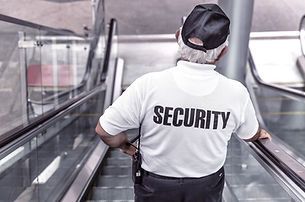
When goods go missing from warehouses, when trucks are hijacked in transit, or when theft seems too precise to be random, there’s often a quiet suspicion shared among logistics managers across Zambia: it was an inside job. And increasingly, fingers are pointing at the very people tasked with protecting these assets—private security personnel.
The Growing Role of Private Security in Zambia
Zambia's private security industry has expanded rapidly in recent decades. With increased threats to commercial cargo, rising property crime, and growth in warehousing and distribution infrastructure, businesses have turned to security companies as a first line of defense. Today, more than 600 registered private security firms employ over 60,000 guards nationwide, safeguarding billions of kwacha worth of goods across the country.
But behind this boom lies a deeper concern: the industry remains under-regulated, inconsistently trained, and too often implicated in the very breaches it's meant to prevent.
The Insider Threat: Security’s Silent Weakness
Globally, insider threats are among the most persistent risks in supply chain security. But in Zambia, the challenge is amplified by several local factors:
-
Low pay and poor job security: Guards are often underpaid and lack benefits, increasing their vulnerability to bribery.
-
Minimal screening and training: Many guards enter the field with limited preparation and without proper vetting.
-
Disconnection from logistics operations: Most security teams have little knowledge of the supply chains they’re meant to protect.
-
Lack of oversight: When breaches occur, they’re rarely investigated thoroughly, allowing repeat offenses to go unchecked.
Industry Insight: Advice from PSCAZ
To gain a deeper understanding of the current landscape and possible solutions, Zambia Global Supply Chain sat down with Raphael Chalwe, Vice President of Operations at the Private Securities Association Zambia (PSCAZ)—an NGO working to represent and regulate member private security companies nationwide. PSCAZ seeks to elevate industry standards and ensure that security providers operate ethically and effectively.
What should companies look for when engaging a private security firm?
Raphael Chalwe: “There are ten minimum checks every company should perform before hiring a security provider.”
-
Confirm registration with PACRA
-
Verify membership with PSCAZ
-
Confirm a physical address
-
Request references from other clients
-
Check for an active Facebook page or online presence
-
Prefer companies with at least two years’ experience
-
Inspect guards’ appearance—uniforms, hygiene, and posture
-
Consider how close the head office is to your site
-
Confirm availability of basic equipment—radios, batons, etc.
-
Ensure guards are paid at least the legal minimum wage
“If even a few of these are missing, that should raise concerns about the company's legitimacy and professionalism,” Chalwe emphasized.
What should clients do after a bad experience with a security company?
“We encourage anyone who’s had a negative experience to contact PSCAZ for guidance or advice. Even if the company in question is not currently a member, we may be able to mediate or direct them to appropriate authorities. Our role is to help protect both the industry’s reputation and the public.”
The Vision Ahead: A Call for Recognition
Chalwe also shared PSCAZ’s broader ambitions—ones that aim to professionalize the entire security ecosystem in Zambia:
“Our long-term vision is to go beyond just being an association. We believe PSCAZ can become a full-fledged regulatory body, empowered through legislation.”
“If possible, we’d like the government to mandate our oversight through a statutory instrument, so we can bring more sanity, order, and professionalism to the security industry.”
“We are also calling on state security agencies to recognize us as partners in the fight against crime. The private sector guards thousands of sites daily—our collaboration with state institutions could dramatically enhance national safety.”
“Finally, we encourage all private security companies—large and small—to join PSCAZ and enjoy the economies of scale we’re creating through training initiatives, collective bargaining, and shared resources.”
A Sector at a Crossroads
Real-life examples continue to reinforce the urgency. In one recent Copperbelt theft case, warehouse guards deliberately disabled CCTV systems to enable the removal of copper cathodes worth over K10 million. In Lusaka, a driver colluding with security guards redirected a fleet of electronics-filled trucks shortly after departure. These kinds of incidents underscore the risk posed when security personnel are poorly selected, underpaid, or unregulated.
Private analysts estimate that up to 40% of commercial cargo theft in Zambia involves insider assistance—a staggering figure that demands attention from both regulators and the private sector.
A New Security Standard for Supply Chains
For Zambia’s logistics and supply chain networks to thrive, particularly in a post-AfCFTA context, private security must be part of the solution—not part of the problem. That means moving beyond a check-the-box model and embracing a more integrated, accountable approach.
Security companies must raise their game. Businesses must vet their partners more thoroughly. And organizations like PSCAZ must be empowered to enforce industry-wide standards.
Because when a breach seems too convenient, too precise, or too perfectly timed, it’s no longer just a question of theft—it's a question of trust. And more often than not, it was an inside job.
Contact Us
Advertising


ZAMBIA GLOBAL SUPPLY CHAIN• COPYRIGHT © 2024 • PRIVACY POLICY