_edited.png)
_edited.png)
FROM COPPER TO CROPS: INNOVATION DRIVING ZAMBIA’S SUPPLY CHAIN FUTURE

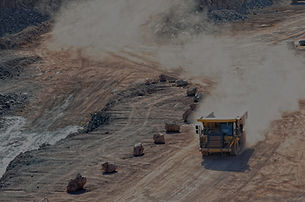
In the evolving global economy, innovation is the lifeblood of resilient and competitive supply chains. Zambia’s strategic position—anchored by vast natural resources, a youthful population, and regional connectivity—places the nation at the forefront of supply-chain transformation in Southern Africa. From cutting-edge mining operations to climate-smart agricultural initiatives, Zambia is embracing innovative technologies and practices that enhance productivity, sustainability, and value creation. This article explores key developments in Zambia’s mining and agricultural sectors, spotlighting how innovation is reshaping supply chains and economic prospects.
The Mining Sector: Driving Global Value Through Technology
Mining’s Central Role in Zambia’s Economy
Mining anchors Zambia’s export earnings and foreign exchange. Copper’s critical role in electrification, renewable energy infrastructure, and industrial manufacturing has placed Zambia’s mining sector in high global demand, particularly as economies transition toward cleaner energy sources. Recent expansions and technological upgrades are unlocking new efficiencies, strengthening domestic supply chains and reinforcing Zambia’s role in global mineral markets.
Innovation at Kansanshi Mine: A Global Benchmark
At the heart of Zambia’s mining innovation stands Kansanshi Mine, a flagship operation in Solwezi’s North-Western Province that blends scale with cutting-edge technology. Operated by Kansanshi Mining Plc, a joint venture between First Quantum Minerals and ZCCM Investments Holdings, Kansanshi is one of Africa’s largest copper and gold mines and a showcase of how innovation can drive both productivity and sustainability.
Kansanshi has adopted advanced mining technologies—such as electric shovels and trolley-assisted haul trucks—that significantly reduce reliance on diesel, cut carbon emissions, and lower operational costs. Around 59% of material movement is now driven by electric shovels, while trolley lines assist haul trucks to reduce diesel consumption by up to 90% on ramps. These innovations reflect a broader industry shift toward electrification and energy efficiency.
A pilot of a 220-tonne battery-electric dump truck, one of the largest of its kind, underscores Kansanshi’s commitment to decarbonising heavy-duty mining fleets and positions Zambia as a testbed for next-generation mining technologies.
S3 Expansion: Doubling Capacity with Intelligent Design
The US$1.25 billion S3 Expansion Project at Kansanshi represents the largest investment in Zambia’s copper sector in nearly a decade and a dramatic step forward in mining innovation. The project includes a new processing plant capable of handling 25 million tonnes of ore per annum, effectively doubling throughput and increasing copper production targets toward 250,000–280,000 tonnes annually. Commissioning occurred ahead of schedule, demonstrating robust project management and technological integration.
This expansion also embeds automation, process optimisation, and real-time data systems, enabling more efficient ore recovery and decision-making. With an extended mine life projected into the 2040s, Kansanshi stands as a long-term beacon of innovation in mining supply chains.
Environmental Stewardship and Data-Driven Monitoring
Innovative environmental management systems at Kansanshi leverage satellite monitoring, fibre-optic communications, and advanced sensors to ensure safe tailings storage and water reuse, enhancing both sustainability and operational resilience. The mine’s approach to water recycling (over 70% reuse) and carbon footprint reduction (cutting 140,000 tonnes CO₂e annually) reflects broader industry expectations that high-tech operations must also be environmentally responsible.
Agriculture: Innovation for Resilience and Growth
While mining remains central, Zambia’s agricultural sector employs a larger portion of the population and is pivotal in ensuring food security, rural employment, and economic diversification. In recent years, a wave of innovation has begun to transform traditional farming practices and value chains.
Climate-Smart Agriculture and Technology Adoption
Climate change has intensified weather variability across Zambia, threatening rain-fed agriculture and underscoring the need for innovation. National and partner-driven initiatives are promoting climate-smart agriculture practices that build resilience and enhance yields. Projects such as early-maturing crop varieties, mechanisation efforts, and behavioural science-informed extension services have helped farmers adopt sustainable practices at scale, boosting yields by up to 60 % in participating communities.
In addition, digital tools like AI-based crop diagnostic apps enable farmers to identify pests and disease threats in real time, connecting modern technology directly to the farm gate and enhancing adaptive capacity against climate pressures.
E-Agriculture and Digital Supply Chain Transformation
Zambia’s digital shift in agriculture, exemplified by initiatives such as the E-Agriculture Project, is enabling data-driven farming and improved supply chain transparency. By equipping extension officers with tablets and connectivity infrastructure and connecting farmers to data services, Zambia is modernising how planting decisions, pest management, and market linkages are managed. These digital platforms also integrate with national systems to help farmers access market information, input subsidies, and export-related services seamlessly.
Similarly, the Zambia Integrated Agriculture Management Information System (ZIAMIS) supports evidence-based planning, real-time tracking of agricultural programmes, and links farmers to buyers, suppliers, and financial services—laying the foundation for a more efficient and transparent agricultural supply chain.
Private Sector and Innovation Hubs
Innovative companies are driving bottom-up innovation by equipping farmers with real-time market data, access to inputs, and farming insights, helping thousands of farmers shift from subsistence to commercially viable operations. These enterprise solutions are transforming not only farm productivity but also how agricultural commodities are marketed and supplied domestically and regionally.
Cross-Sector Innovation: Linking Mining and Agriculture
Zambia’s innovation story isn’t confined to sector silos. Forward-looking approaches increasingly recognise the synergies between industries. For example, logistics infrastructure developed for mining is being marshalled to support agricultural distribution, improving rural access to markets and reducing post-harvest losses. Community initiatives focused on climate-smart farming—supported by mining foundations and agritech partnerships—are strengthening food systems while building linkages between extractive industry adoption of digital tools and agricultural resilience.
Transport and Logistics: The Quiet Revolution Powering Zambia’s Supply Chains
No supply chain innovation can succeed without an efficient, adaptive transport sector. In Zambia, transport and logistics have undergone a quiet but profound transformation over the past decade, evolving from fragmented, owner-driver dominated operations into a more structured, technology-aware, and inclusive ecosystem that supports mining, agriculture, and regional trade.
From Ownership Barriers to Inclusive Participation
One of the most significant innovations in Zambia’s transport sector has been the rise of driver-to-owner empowerment models, most notably the BHL Driver-Owner Scheme. Traditionally, access to fleet ownership required significant capital, effectively excluding skilled drivers from economic advancement. BHL’s model disrupted this norm by enabling experienced drivers to progressively acquire ownership of trucks through structured repayment and performance-based systems.
This approach has delivered multiple supply-chain benefits:
• Improved driver accountability and vehicle care
• Reduced turnover and higher operational reliability
• Expanded local participation in large-scale logistics contracts, particularly in mining corridors
By transforming drivers into entrepreneurs, the scheme has strengthened human capital within the transport sector while ensuring consistent service delivery for major shippers.
Fleet Modernisation and the Rise of Chinese Truck Brands
Another visible shift in Zambia’s transport innovation landscape is the widespread transition from traditional European truck brands to Chinese manufacturers. This shift has not been merely a cost-saving exercise—it represents a strategic rethinking of fleet economics in a challenging operating environment.
Chinese truck brands have gained rapid adoption due to:
• Lower upfront acquisition costs
• Improved fuel efficiency for long-haul African routes
• Increasing availability of spare parts and local service centres
• Robust performance in mining, agricultural, and cross-border conditions
Technology, Tracking, and Professionalisation
Additionally, Improved compliance with load and safety regulations are elevating the professionalism of Zambia’s transport sector. What was once a largely informal industry is increasingly becoming a strategic partner in national development.
Supporting Mining and Agriculture Alike
The modernised transport sector now plays a dual role:
• For mining, it ensures reliable movement of copper, inputs, and equipment across long distances and borders.
• For agriculture, it enables small-scale and commercial farmers to access markets more efficiently, reducing post-harvest losses and improving rural incomes.
The same logistics networks that move minerals to ports are increasingly being leveraged to move grain, fertiliser, and agricultural produce—creating efficiencies across sectors and reinforcing integrated supply chains.
Conclusion: A Future Driven by Innovation
Zambia’s embrace of innovation—whether in the electromagnetic heart of its copper mines or the digital fields of its farms—is positioning the nation as a dynamic node in regional and global supply chains. Through investments in modern equipment, data-driven systems, and climate-resilient agriculture, Zambia is not just extracting value; it is creating integrated, adaptable, and forward-looking supply networks that can withstand global shocks and drive sustainable growth.
To sustain and expand this momentum, continued collaboration between government, private sector innovators, research institutions, and communities will be essential. The story of Zambia’s innovation journey is far from complete—but its chapters so far are written with intention, ingenuity, and a bold vision for the future.
Contact Us
Advertising


ZAMBIA GLOBAL SUPPLY CHAIN• COPYRIGHT © 2024 • PRIVACY POLICY